Designing a Multiplayer Experience for Gen Z Museum Engagement
DURATION
12 weeks
TEAM
Lanting K, Claire P, Isadora O, Eric L
CLIENT
National Gallery of Art
SERVICE
UX Strategy, UX Research, Product Design
TOOLS
Figma, Panelfox, Zoom, Google Sheet
Long Story Short
13% of NGA’s website users are Fun Seekers, the youngest audience group and mostly Gen Z. However, they have the lowest satisfaction among all groups. While Artle drives 10,000 daily players, it focuses on guessing rather than active participation.
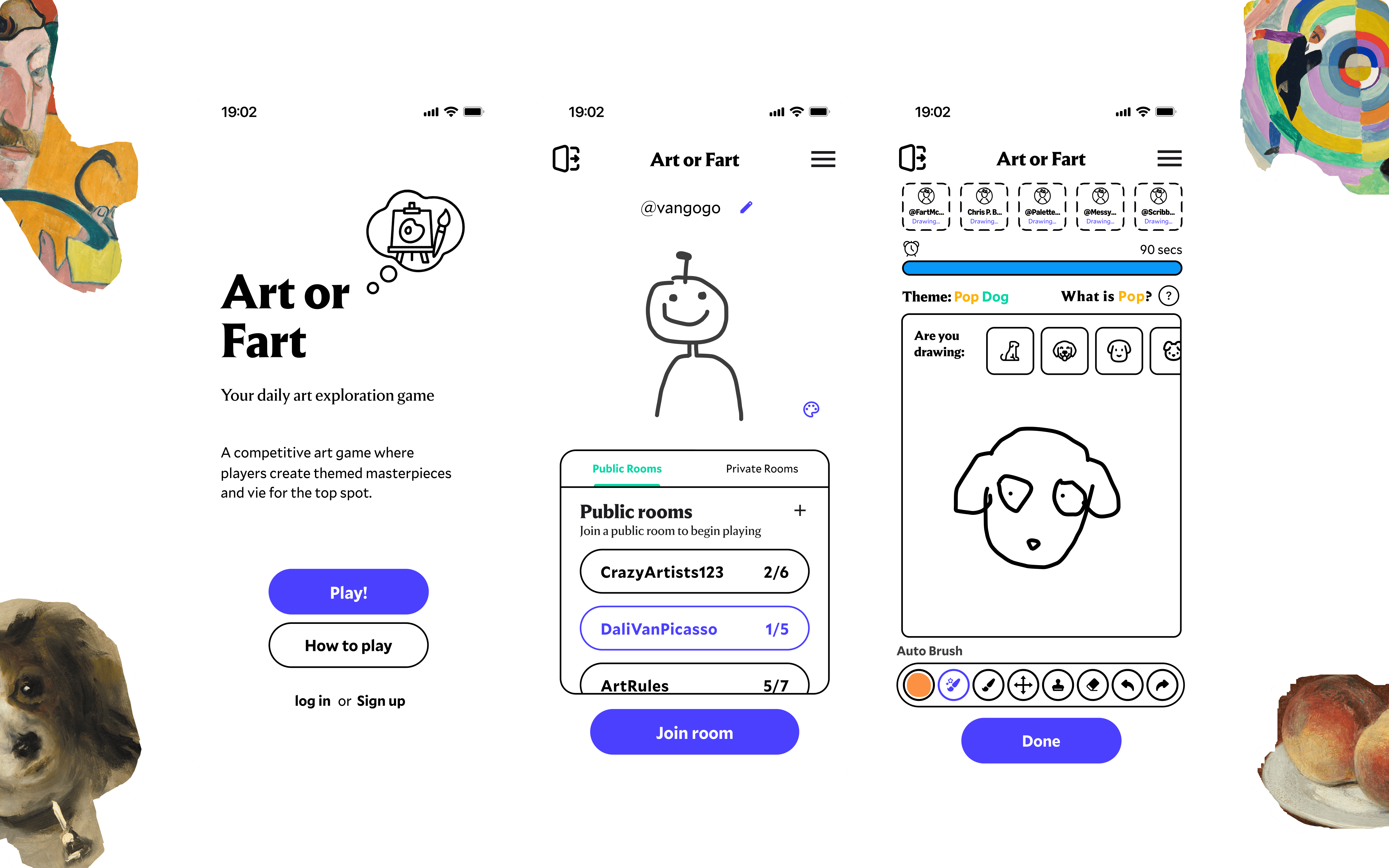
In this project, I addresses this gap by shifting art engagement from passive recognition to social creation. It is a multiplayer drawing experience where users create, compete, and share.
Problem
High Traffic, Low Satisfaction Among Gen Z
As a world-class art museum, NGA attracts significant online traffic, but Fun Seekers, largely Gen Z, have the lowest satisfaction among the six audience groups. NGA had already experimented with several approaches to attract them. One example is Artle, a daily art-guessing game. Artle attracts around 10,000 players each day, and Fun Seekers are one of its main user groups, proving that games work. However, like many lightweight guessing games, it has limitations. It supports only a narrow type of interaction. This creates an opportunity to design a mobile experience that better aligns with how Fun Seekers want to engage.
What National Gallery of Art already know
13% of Fun Seekers have low satisfaction
Fun Seekers make up 13% of online traffic. However, they have the lowest satisfaction.
Engagement is narrow
Artle drives strong return behavior, with 54% of Fun Seekers coming back. However, a lack of interactive content remain their main pain point.
57% Mobile Traffic
Fun Seekers use mobile as their main device to access NGA site
Research
Engaging Informative experience is shaped by social and authentic.
Based on these insights, we focused on understanding what Gen Z Fun Seekers consider fun and how they behave on museum websites.
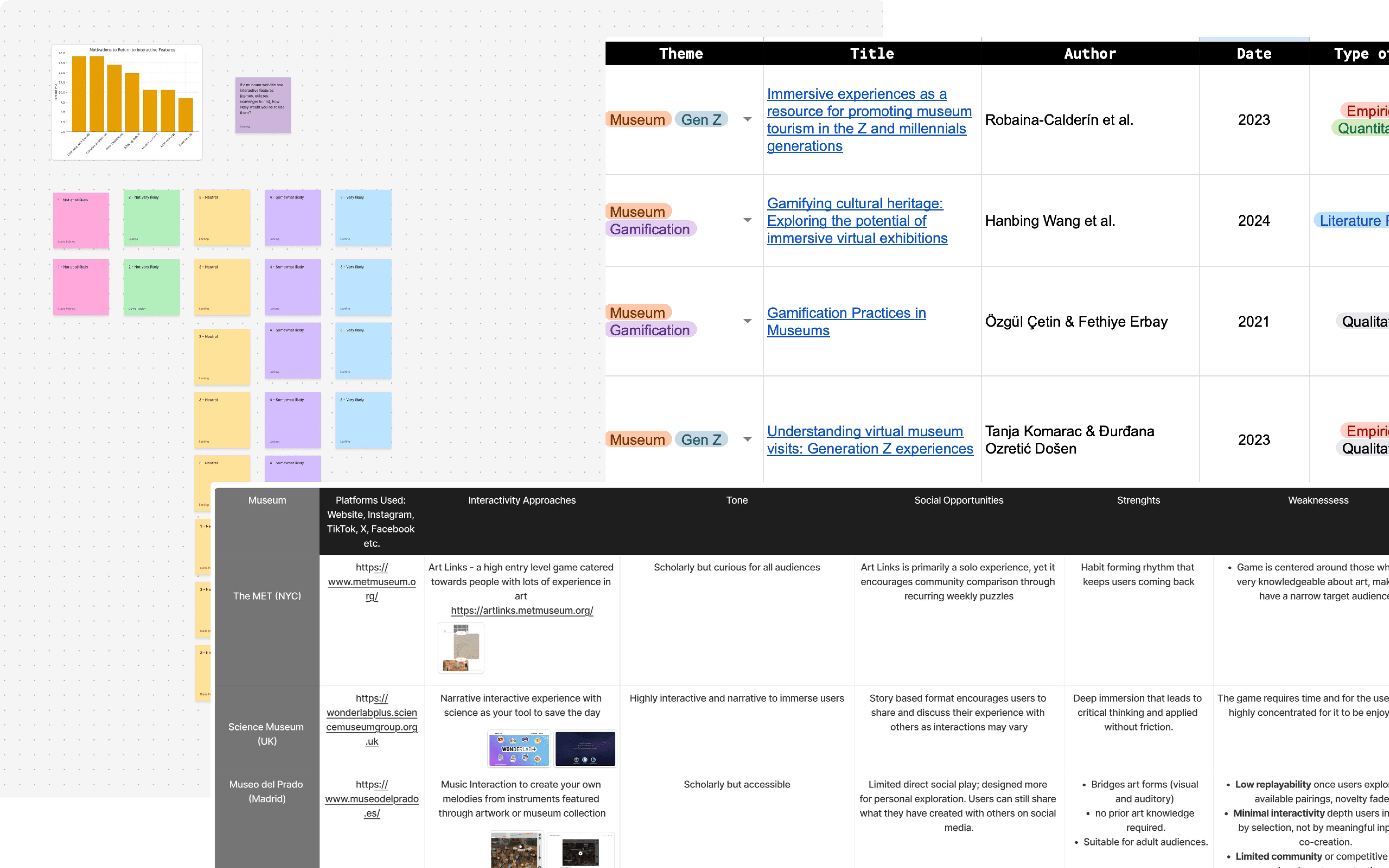
Museum websites are informative but not engaging
Survey
Interview
Fun is social, sharing and co-creation
Survey
Literature Review
Interview
Value authenticity
Survey
Literature Review
Strategic Direction
Meet Gen Z where they already are
Our strategy focused on shifting from one-way interactions to participatory, shareable experiences, while rethinking information discovery as an engaging process. Instead of relying on standalone game mechanics, we integrated social and co-creative behaviors into the core art experience.
We designed a participatory art experience that turns exploration into a social, game-driven interaction.
Discover
See game on NGA site
🤔
Join
Read rules and enter lobby
😌
Play
Theme Reveal and play
😤
Social
Vote
😄
Results
Leaderboard and share
😊
Ideation
Creating art as competition
Our breakthrough was Art or Fart, a concept inspired by Gen Z's fast-paced digital culture that transforms art appreciation into a competitive, social game. Earlier ideas fell short because they lacked immediacy and social interaction.

Design Decision
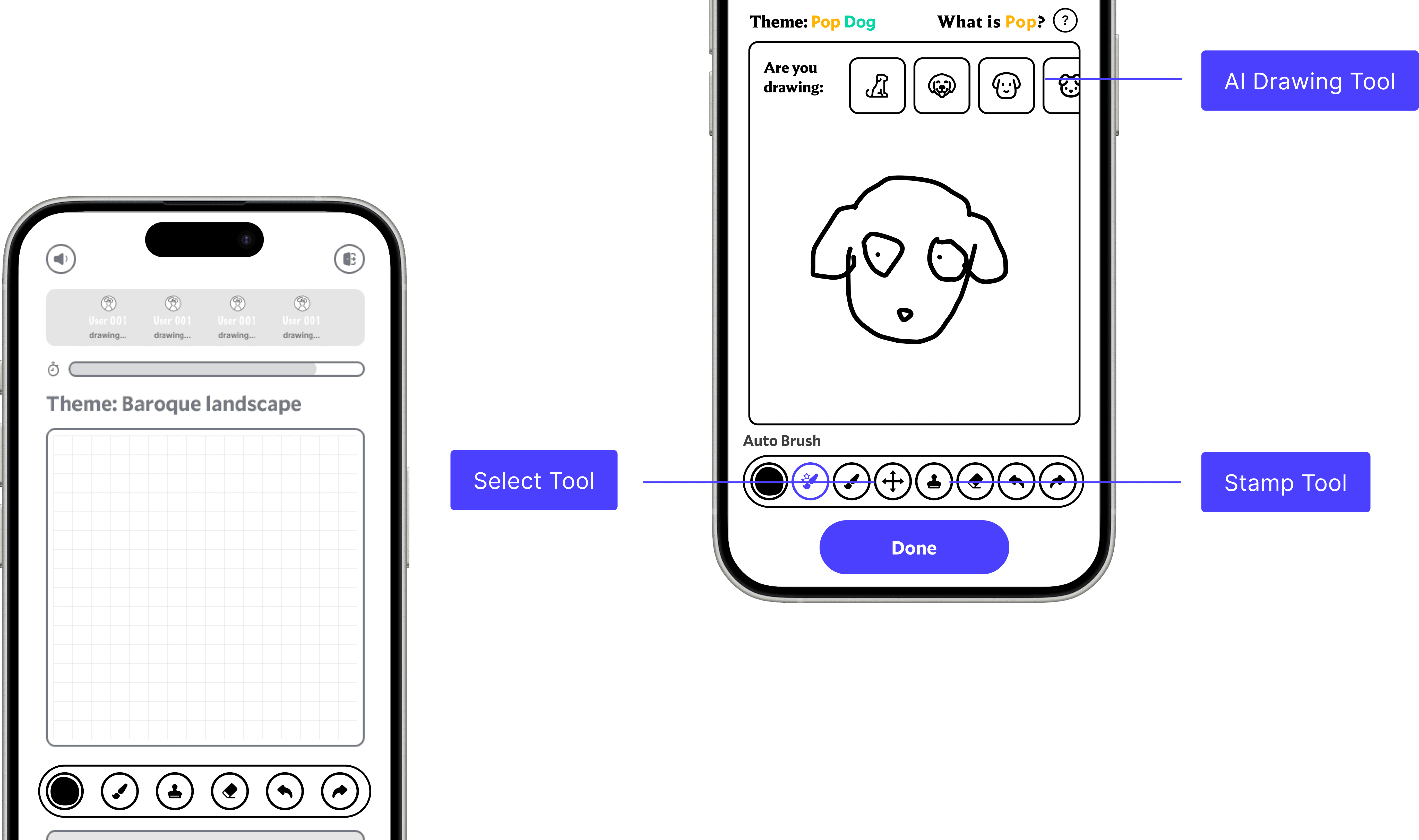
Lower the barrier to drawing with a finger
Drawing on a small screen with just a finger creates a high barrier to entry. We integrated multiple drawing assist tools that interpret sketches and suggest options, making creation feel accessible rather than frustrating.
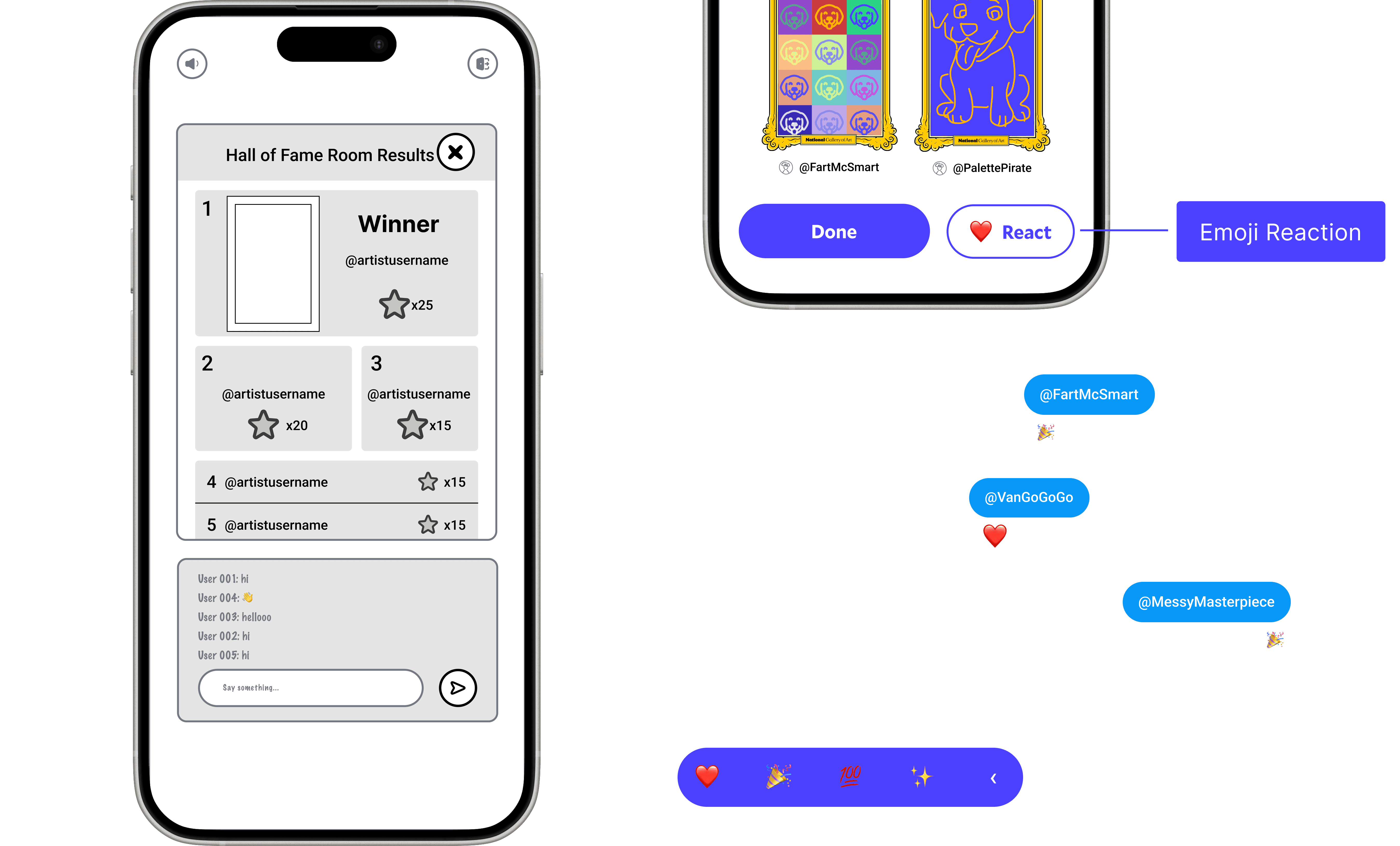
Social Expression Without Losing Control
Open chat risked undermining NGA's institutional voice. We replaced it with a Reactions button, preserving social expression while keeping communication controlled.
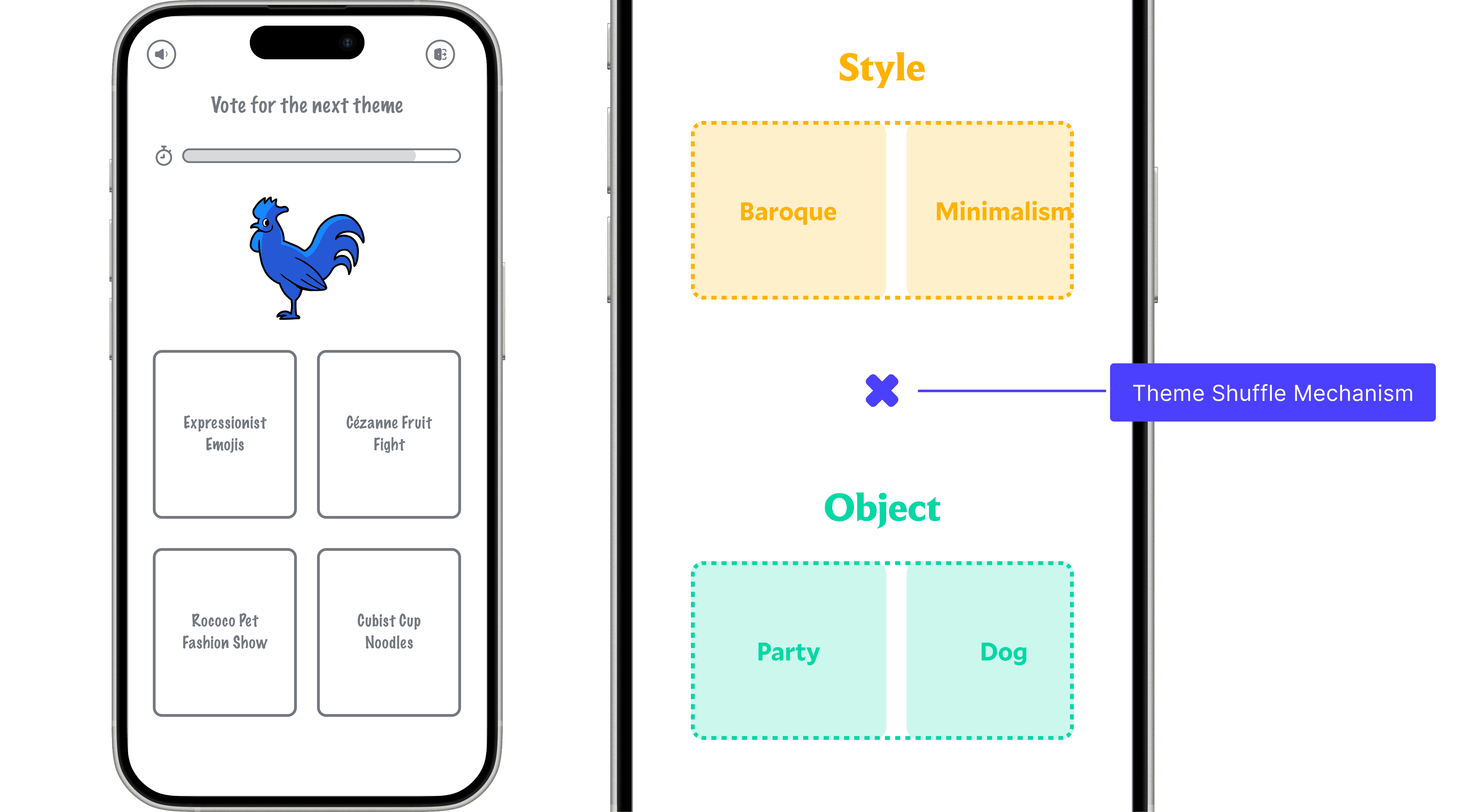
Learn Through Play
Letting users vote on themes created more problems than it solved. A carousel selector combining art style and object gave players more variety, clearer context, and a built-in learning moment.
Impact
Transform learning into game
Art or Fart is a competitive, multiplayer drawing game where players paint to a themed prompt, vote on each other's work, and climb a weekly leaderboard.
01 One-way information channel to a participatory platform
02 Competitive game loop maintains social engagement
03 Naturally surfaces NGA's collection through prompts
“A lot of this is familiar to our developers into our site… I can see this easily fitting in to our portfolio of products.”- NGA Team
Conclusion
Scaling the Experience
Future work will focus on expanding the catalogue of themes, and integrating a shared engagement system that connects this experience with other NGA games, encouraging long-term participation and extending engagement across the broader NGA ecosystem.